How Can Creators Get Paid for Sponsored Content?
Learn the main ways creators get paid for sponsored content: flat fees, commission, gifting and retainers. Plus simple tips to set your rate and get paid on time.
· 8 min read
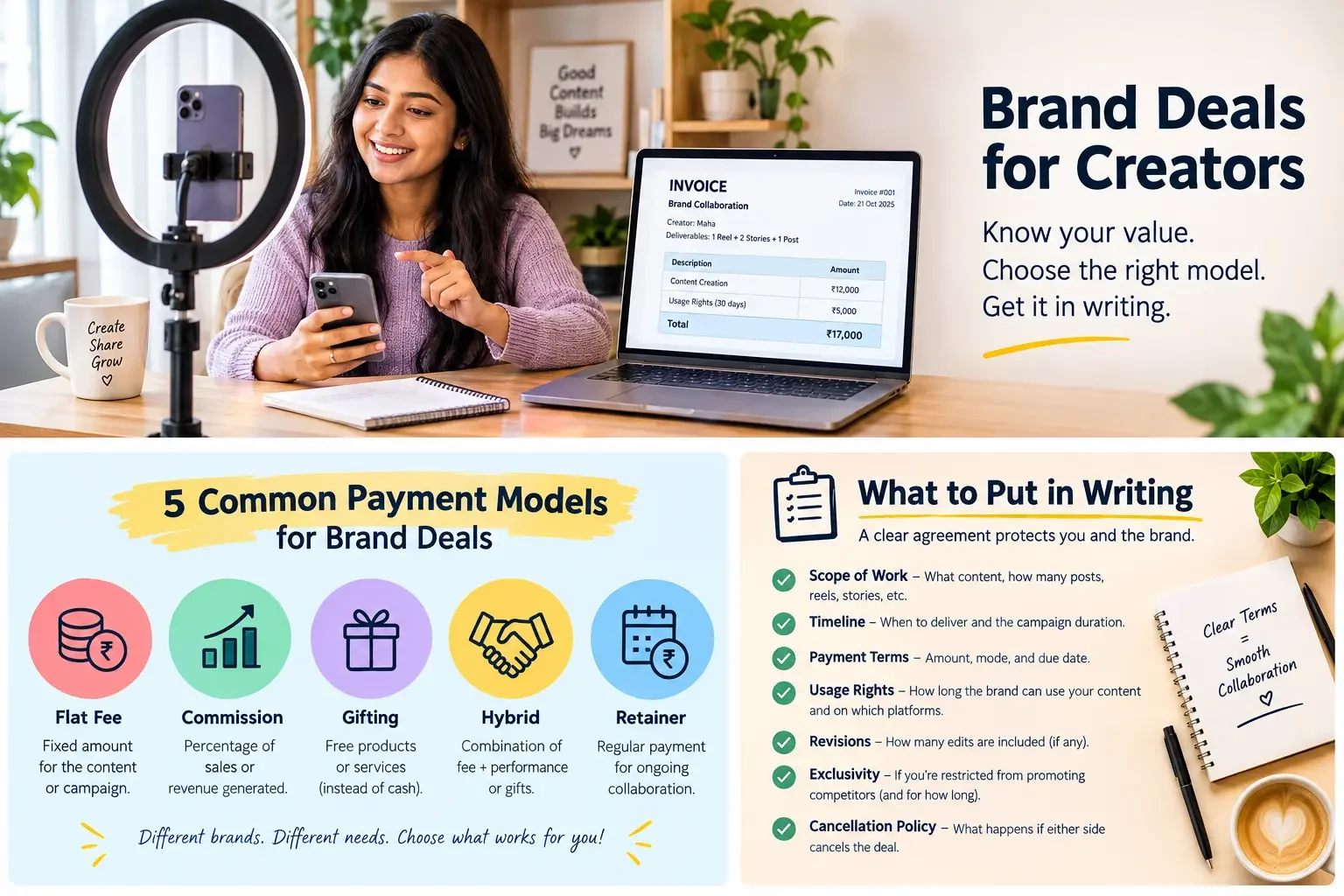
Creators usually get paid for sponsored content in four ways: a flat fee for each piece of content, a commission on the sales they bring, free products, or a mix of these. Some creators also sign monthly deals with brands. Whatever the model, a good deal is always written down clearly: what you will make, how much you will earn, and when the money will arrive.
You post a video, tag the brand, and everyone is happy. But then comes the question many new creators are afraid to ask: "So... how do I actually get paid?"
This guide explains the main ways, how to decide your price, and what to check before you say yes. No matter where you’re based, this guide can help you.
What is sponsored content?
Sponsored content is a post, video or story that a brand pays for, either with money, with free products, or both. You make the content, share it with your audience, and clearly tell people it is a partnership.
5 ways creators get paid
1. Flat fee
The brand pays one fixed amount for the work you agree on, for example one reel and two stories. You and the brand agree on the payment before the project begins. You know exactly what you will earn, even if the post does not sell much.
Most creators like this model because their time and effort are paid for.
2. Commission
You earn a share of the sales you bring, usually through your own link or discount code. It is a bit like a tip: great when your audience buys, nothing when they do not. You may see better results when the product suits your niche and your audience has confidence in your opinions. But be careful. If you only accept commission, you may spend days on content and earn very little.
3. Free products (gifting)
The brand sends you a product or service instead of money. This is common for smaller creators and first collaborations. It can be a good start, especially if you would have bought the item anyway. But free products cannot cover your rent or your time, and your effort still has real value. Many creators move from gifting to paid deals after a few collaborations.
4. Hybrid deals
This mixes models, such as a smaller flat fee plus commission, or a free product plus commission. It is a fair middle path because the brand shares the risk with you, and you still get paid for your effort.
5. Retainers
A retainer is a regular monthly payment for a set amount of content over several months. It gives you steady income, and the brand gets a creator who knows the product well. If a brand loves working with you, ask whether a longer deal is possible.
What decides how much you can charge?
There is no single price list that fits every creator. Brands usually look at:
Your audience: how real and active your followers are, and whether they match the brand's customers
Your content type: a polished video usually takes more time than a simple photo post
The number of deliverables: one reel is very different from a reel, three stories and a blog post
Usage rights: will the brand only wait for you to post, or will it also reuse your video on its own page or in ads? Wider use usually deserves extra pay
Exclusivity: if you agree not to work with similar brands for a while, you are giving up other income, so this should be paid too
Timeline: very short deadlines can deserve a higher fee
A simple way to set your rate
You can work out your starting rate without using complex formulas:
1. Write down how long the content will really take: planning, shooting, editing and posting.
2. Set a fair rate for the time you invest and include any extra expenses, such as equipment, props, and transportation.
3. Check what your last posts achieved: views, saves, clicks, comments.
4. Quote a base price for the main deliverable, then add separate prices for extras like usage rights, exclusivity or rush work.
5. Keep a little room to negotiate, and do not accept "exposure" as your only payment.
Tip: offering two or three simple packages, like "1 reel" or "1 reel + 3 stories", makes the talk easier for both sides.
Put everything in writing
Before you start, make sure the agreement covers these points. A short email is better than nothing, and a contract is best:
What exactly you will create and on which platform
The fee, and the currency
The deadline for submitting your content for approval and the scheduled publication date.
How many rounds of changes are included
The payment schedule, preferred payment option, and the procedure for handling delayed payments.
The duration of the brand’s usage rights and the platforms or channels where your content may appear
Any exclusivity rules
What happens if the brand cancels
How brands send your payment:
Payments are commonly made through direct bank deposits or digital payment platforms. In many cases, you’ll need to submit an invoice before the brand processes your payment. Payment is often made some weeks after the content is delivered, and for bigger projects, some creators ask for part of the money upfront. Agree on the payment date before you start and keep copies of your invoices and messages.
Two things creators should not ignore
1. Tell your audience it is a paid partnership. Rules differ by country, but the basic idea is the same: your followers should be able to see easily that a post is sponsored. In the United States, for example, the FTC says disclosure should be hard to miss, placed with the post itself, and written in simple, clear words such as "ad" or "sponsored" (FTC). Check the rules in the countries where your followers live.
2. Think about tax. In many countries, money from sponsored content counts as income, and free products you receive in return for promotion may count too. Rules are different everywhere, so keep records of what you earn and receive, and speak to a local tax professional.
Mistakes that cost creators money
Accepting "exposure" as full payment for work that clearly helps the brand
Starting without any written agreement
Giving the brand unlimited use of your content for one small fee
Forgetting to send the invoice or to follow up when payment is late
Taking commission-only deals without knowing how sales will be tracked
Saying yes to every offer, even when the brand does not fit your audience
How Thayyal helps creators
Brands often look for creators they can trust, so a clear and professional profile makes a difference. On Thayyal, you can build your creator profile, show your work and the platforms you create on, and discover brand opportunities that match your niche. A strong profile makes it easier for brands to see who you are before they talk about any deal.
FAQ
How do creators get paid for sponsored content?
Creators can earn through a fixed project payment, sales-based commissions, complimentary products, or a combination of different compensation options. Some also receive monthly payments from brands they work with regularly.
The exact amount and date should be written in the agreement.
How much should I charge for a sponsored post?
It depends on your audience, your engagement, the type of content, how many deliverables there are, and how the brand will use your work. Start by calculating your time and costs, check how your earlier posts performed, and quote a base price plus separate prices for extras like usage rights and exclusivity.
Can I get brand deals with a small audience?
No. Many brands care more about whether your audience is real, active and interested in their product than about a big number. Small creators often start with free products or small fees and grow from there.
Can I accept free products only?
You can, especially for your first collaborations or for products you truly like. But if the brand expects regular content, a deadline and posting on your channel, that is work, and it is fair to ask for payment as well.
When will I get paid?
It depends on the agreement. Many brands pay after the content is delivered and the invoice is sent, and some pay part of the fee upfront. Always agree on the payment date in writing before you start.
Do I have to pay tax on money from sponsored content?
In many countries, yes. Income from sponsored posts, and sometimes the value of free products received for promotion, may be taxable. Tax obligations vary by location, so maintain accurate income records and consult a qualified tax adviser in your area.
Final thoughts
Getting paid for your content is not about luck. It is about knowing your value, choosing a fair payment model, and agreeing on the details before you start. Begin with small collaborations, keep everything in writing, and increase your price as your results grow.
Ready to meet brands? Join Thayyal as a Creator, build your profile and discover opportunities that fit your niche. And if you are a brand looking for creators, start with Thayyal too.