Influencer Marketing for Small Businesses and Startups in India
Learn how small businesses and startups in India can use influencer marketing to find customers. Simple steps, honest ROI tips and answers to common questions.

· 7 min read
Think about the last time you bought something because someone you follow talked about it. Maybe it was a face wash, a pair of earrings, or a new snack brand you had never heard of. You did not see a big hoarding or a TV ad. You just trusted a person who seemed real.
That is the whole idea behind influencer marketing. And the good news for small business owners and startup founders is this: you do not need a film star or a crore-rupee budget to use it.
This guide explains, in plain words, how a small brand in India can start with influencers, what to avoid, and how to know if it is actually working.
What is influencer marketing, in simple words?
Influencer marketing means you work with a content creator who already has an audience, and that creator shows your product or service to their followers. The creator could be on Instagram, YouTube, or any other platform. They might make food videos, fashion reels, tech reviews, or travel vlogs.
The followers trust the creator's opinion. So when the creator says "I tried this and it worked for me", people listen. That trust is what you are borrowing for your brand.
Why it suits small businesses and startups
Big companies can spend on TV, newspapers and large paid-ad campaigns. Most small businesses cannot. Influencer marketing gives you a smaller, more flexible way to be seen.
Here is why many small brands like it:
• You can start small. A single creator and a single product is a valid first campaign.
• You reach the right people. A creator who talks only about home baking already has an audience that loves baked goods.
• It feels personal. A real person using your product usually feels warmer than an advertisement.
• Local and regional reach is possible. Creators who speak Tamil, Marathi, Bengali or Telugu can connect with people that a national campaign may miss.
Industry reports put India's influencer marketing industry at roughly ₹3,000 to ₹3,500 crore in 2025, and the figure keeps growing (NetInfluencer, citing the Kofluence report). Different reports give different totals, because it is hard to measure deals that happen directly between brands and creators. But all of
them point in the same direction: more brands are using this channel every year. Smaller cities are also becoming a big focus, as audiences there spend more time on short videos.
Start with nano and micro influencers
Many first-time brands think they must hire someone with lakhs of followers. In most cases, this is not the smartest way to start.
Roughly speaking:
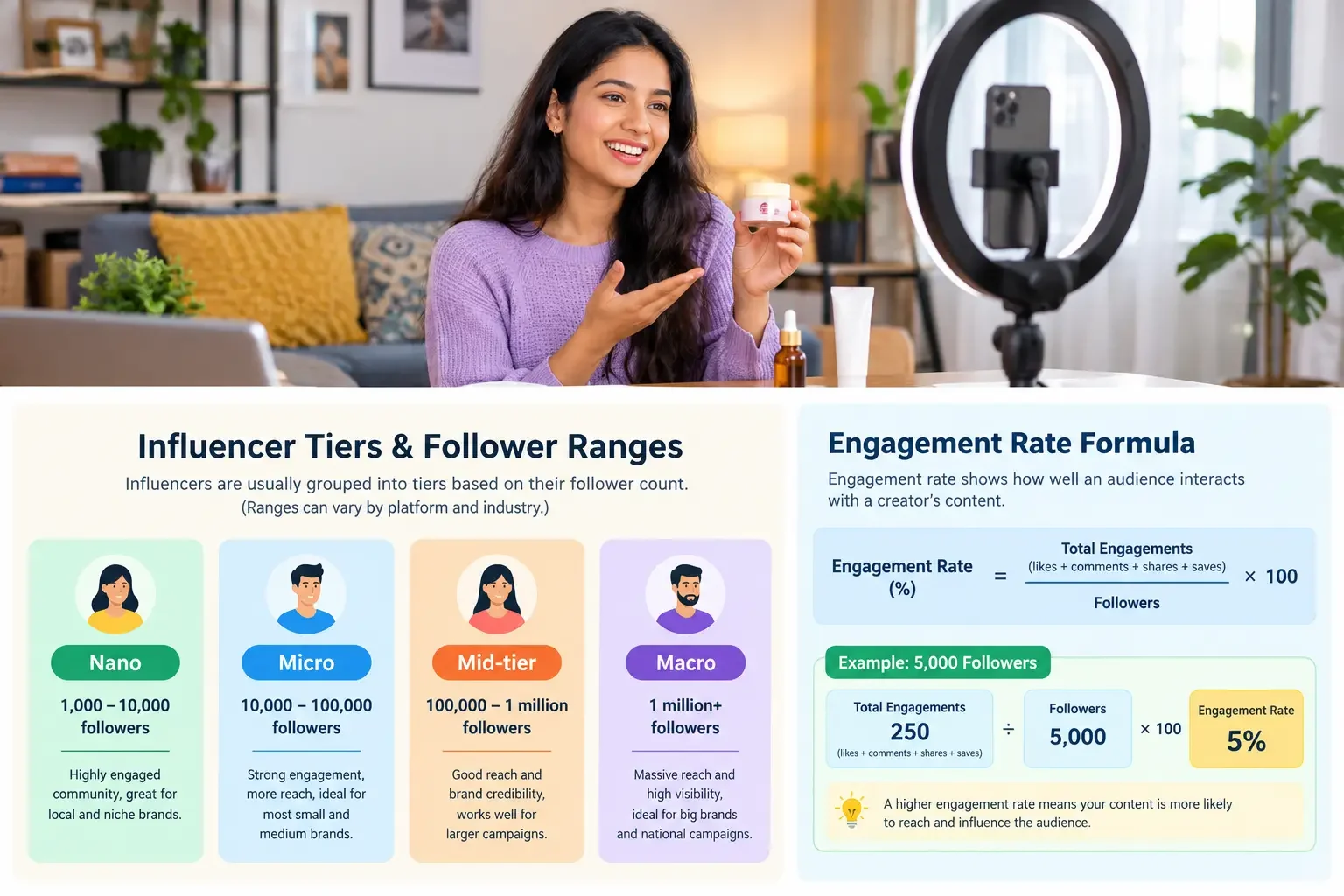
• Nano creators have a few thousand followers.
• Micro creators have somewhere between 10,000 and 100,000 followers.
• Mid-tier creators have a larger following, in the lakhs.
The exact numbers change from platform to platform, so do not treat them as strict rules.
Smaller creators often have a closer bond with their followers. People comment, ask questions and actually reply to each other. A research study from Baylor University's Keller Center, which looked at more than 1.8 million purchases, found that nano and micro influencers gave better return on spend than larger ones (Baylor University).
To be fair, not every study says the same thing. An older Mediakix analysis of Instagram sponsored posts found similar engagement rates for micro and macro creators. So the safest advice is: do not choose by follower count alone. Check the quality of the audience.
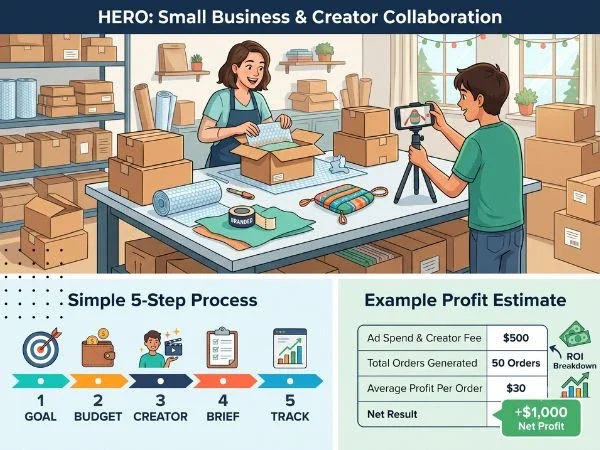
How to run your first campaign: 5 simple steps
1. Decide one clear goal
Do you want more website visits, more orders, more Instagram followers, or more people trying a sample? Pick one. Expecting everything from a single post makes it difficult to see what gave you results.
2. Fix a small budget
Decide how much you are comfortable spending on this first test. Your cost may be a creator fee, free products, or both. Keep it small enough that you can learn without stress.
3. Find the right creator
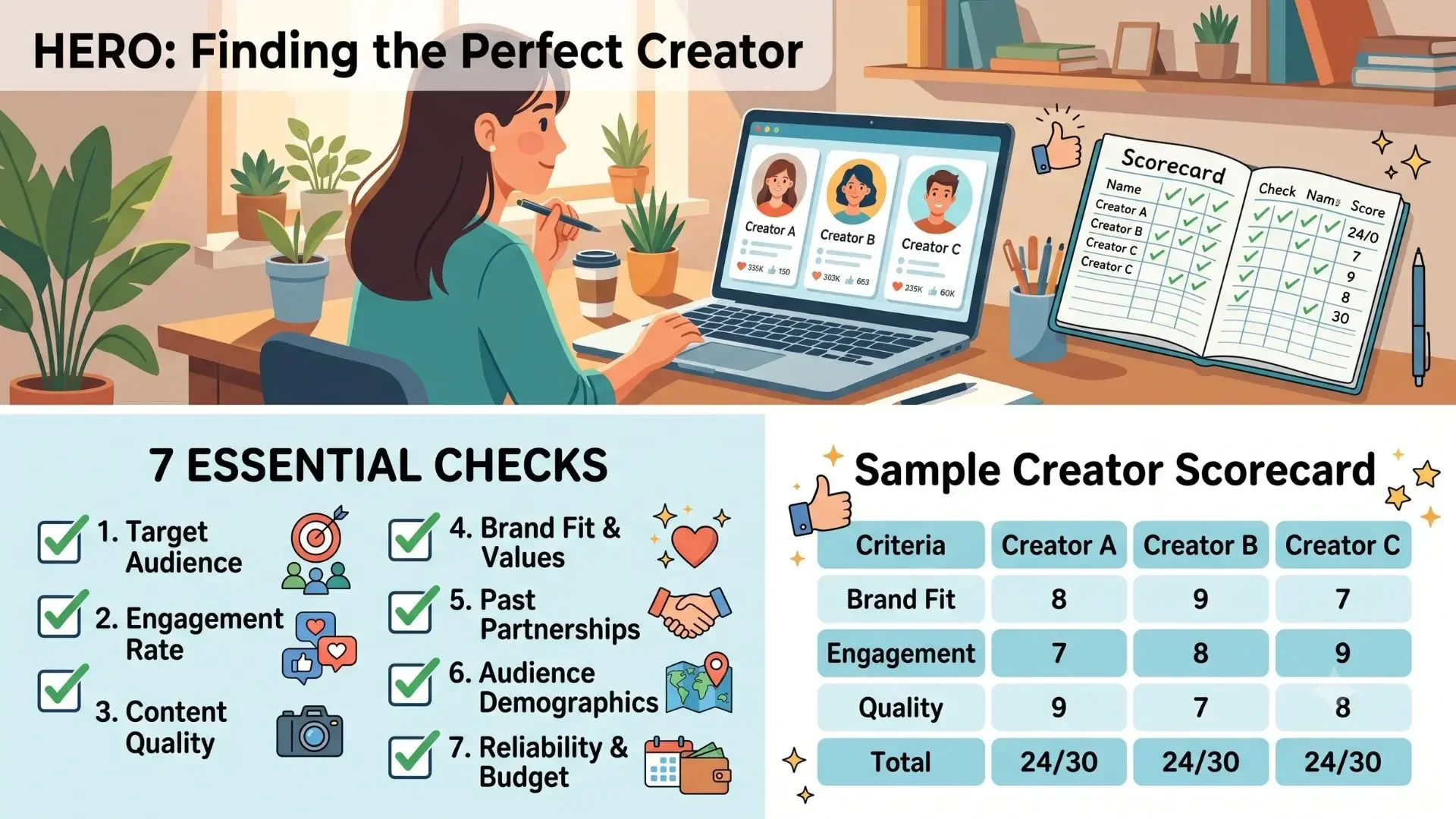
Look beyond followers. Ask yourself:
• Does the creator talk about my kind of product?
• Are their followers mostly from the cities or states where I can deliver?
• Do they post in the language my customers use?
• Do real people comment on their posts, or is it all emojis?
• Does their past sponsored content look honest?
On Thayyal, you can search creators by niche, platform, audience, location and creator type, so you do not have to scroll endlessly through Instagram searching for someone suitable.
4. Share a simple brief, then give freedom
Tell the creator what your product is, who it is for, and what you want people to do after watching (visit a link, use a code, or order). Then let the creator make the content in their own style. Their followers like them for their way of speaking, so a stiff, scripted video usually falls flat.
5. Track the result and learn
Give every creator their own code or link, so you know which post actually got you orders. Write down what worked and what did not, and use it for your next campaign.
Mistakes small brands often make
• Choosing only by follower count. A big number does not guarantee real buyers.
• Having no goal. "Let's just try and see" makes it hard to judge the result.
• Expecting one post to change everything. Results usually build over a few posts or a few months.
• Forgetting disclosure. Always tell viewers when a post is a paid promotion. Indian advertising and consumer-protection guidelines expect this, so ask your creator to follow them.
• Skipping the follow-up. If someone comments with a question, reply. That is where sales often happen.
FAQ
Why is influencer marketing important?
Influencer marketing is important because people trust people more than they trust brand advertisements. A creator already has an audience that listens to them, so when they recommend a product, it feels like advice from a friend and not like an ad.
For small businesses and startups, it matters for three more reasons. First, it lets you reach a very specific audience without spending on mass advertising. Second, it helps you build trust quickly when nobody knows your brand yet. Third, you get real content, such as reviews and videos, that you can also use on your own page and website.
Is influencer marketing profitable?
It can be, but nobody can promise it. Profit depends on your product, your price, the creator you choose, and how well you track the campaign.
Here is a simple example. The numbers are only for understanding, not a promise:
• You spend ₹10,000 in total (creator fee plus free products).
• The campaign brings 40 orders.
• You earn ₹350 profit on each order after product and delivery costs.
• That is ₹14,000 in profit, so after the ₹10,000 spend you are ₹4,000 ahead.
Now see what happens with only 20 orders: you earn ₹7,000, and you are ₹3,000 behind on that first campaign. But if a few of those customers buy again, the picture can change. That is why you should track repeat customers as well as first orders.
Small tests, honest tracking and a good match between creator and product are what make influencer marketing worth it. If numbers look poor after two or three tries, change the creator, the offer or the product, and test again.
Last Punch
Influencer marketing is not magic, and it is not only for big companies. For a small business or startup, it is a practical way to be seen by the right people and to build trust without a huge budget.
Start with one clear goal, pick one or two creators who truly fit your brand, track what happens, and keep improving.
If you are ready to find creators for your brand, create a brand account on Thayyal and start discovering creators by niche, platform, audience and location. And if you are a creator, join Thayyal to build your profile and meet brands.